

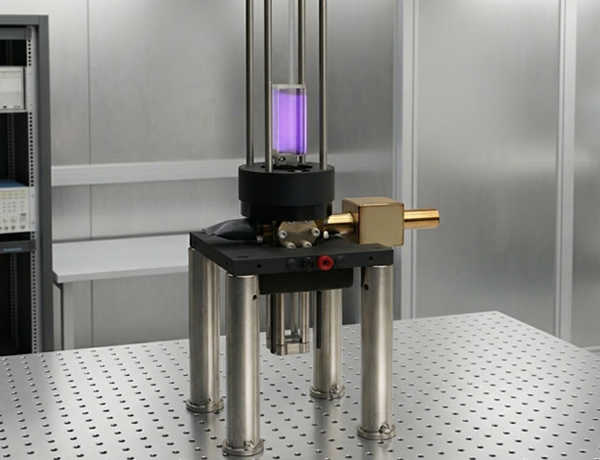


Proven Quantum Hardware
Quantum experiments demand precision across vacuum, optics, magnetics, atom delivery, and control. Quantum Cores bring those critical layers together in ready-to-use components and preassembled platforms, helping teams shorten the path from setup to useful experimental work.
Select the integration level that fits your lab, from individual ultra-high vacuum (UHV) components to preassembled systems for magneto-optical trap (MOT) and ultracold atom experiments.
Build at the Level You Need
-
Start with UHV glass cells and cold atom sources when your apparatus calls for maximum configuration freedom.
-
Move to preassembled MOT and ultracold atom platforms when faster deployment is the priority.
-
Complete the setup with matched optics, magnet assemblies, beam delivery, documentation, and applications support.



Products
Quantum Core Portfolio
Choose the core, subsystem, or accessory that matches your experiment and integration needs.
-
Explore Glass Cells
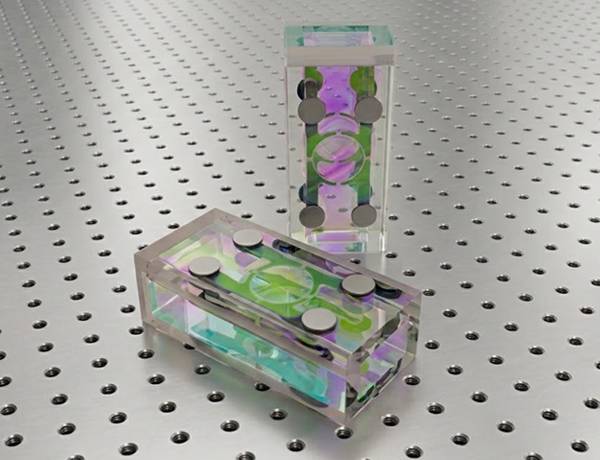
UHV Glass Cells
High-NA imaging, AR-coated, and thin-walled cells provide UHV compatibility and optical access for MOT, Bose-Einstein Condensate (BEC), and optical-tweezer experiments.
-
Explore Atom Sources
Cold Atom Sources
CASC isolates high-pressure 2D+ MOT operation from the science chamber to deliver high cold atom flux in rubidium or cesium systems.
-
Explore miniMOT Platform
miniMOT V2
Build a compact live MOT with miniMOT V2, pre-aligned optics, coils, and compatible glass cells for research, teaching, and prototyping.
-
Explore Cold Atom Lab Systems
Dual-Chamber Cold Atom Systems
Pair doubleMOT or RuBECi with the Physics Platform for configurable 2D+ and 3D MOT beam delivery, imaging, and optical pumping.
-
Explore Magnet Assemblies
Magnet Assemblies
Generate and tune MOT fields with miniMOT coils, 2D+ MOT magnet assemblies, and TriCoil hardware designed around Infleqtion vacuum systems.
-
Explore Picas
Picas Beam Delivery
Deliver alignment-free 2D+ MOT beams with compact optical beam delivery, fiber-coupled inputs, integrated monitoring, and rubidium or cesium wavelength options.
Applications
Quantum Research and Education
Built around one platform, offering multiple paths across quantum research, teaching, and prototyping.
-
Teaching Labs
Give students hands-on experience with lasers, optics, vacuum systems, controls, MOTs, and cold atom physics on compact lab hardware.
-
Fundamental Physics
Create and manipulate neutral and ultracold atoms for experiments in atomic physics, quantum matter, and matter-wave phenomena.
-
Bose-Einstein Condensate Research
Use RuBECi’s atom-chip architecture and compatible optics to support rapid BEC production, imaging, and ultracold atom manipulation.
-
Quantum Sensing
Build cold atom testbeds for research into atom interferometry, timing, inertial sensing, and other precision-measurement concepts.
-
Quantum Computing
Build neutral atom experiments, optical tweezer research, and quantum information testbeds with vacuum and atom delivery hardware.
-
Ion-Trap Research
Use compact or cryogenic UHV housings with clean trap surfaces and optical access for trapped-ion experiments and device integration.


Frequently Asked Questions
Infleqtion Quantum Cores are ready-to-use components and systems for dispensing, trapping, cooling, and manipulating atoms or ions. The portfolio includes ultrahigh-vacuum glass cells, cold atom source cells, magneto-optical trap systems, optics platforms, magnetic assemblies, and ion-trap packages. These products let teams start from proven experimental infrastructure instead of building every subsystem from scratch.
Quantum Cores are designed for university laboratories, government research programs, quantum startups, established technology companies, and educators. They support work in quantum computing, sensing, timing, networking, standards, and fundamental atomic physics. Buyers range from teams creating a first magneto-optical trap to experienced groups integrating a custom neutral atom platform.
A magneto-optical trap, or MOT, combines laser light and magnetic fields to slow and confine neutral atoms. Infleqtion offers compact systems such as miniMOT V2 for accessible trapped-atom operation, plus doubleMOT, RuBECi, Physics Platform, Picas, cells, and coil assemblies for more configurable experiments. The right combination depends on atom species, flux, optical access, vacuum, and experimental goals.
Yes, selected systems are designed to support Bose-Einstein condensate, or BEC, production when paired with the required lasers, optics, controls, and experimental sequence. RuBECi integrates an atom chip for rapid BEC production, while other products provide cold atom sources, vacuum, trapping, imaging, and optical infrastructure. Users should confirm the complete configuration and performance requirements with Infleqtion.
Start with the atom or ion species, target state or experiment, required optical access, vacuum level, atom flux, available lab space, and desired degree of customization. Teams seeking rapid setup may prefer a preassembled MOT system, while advanced programs may combine cells, sources, optics, and magnetic components. Infleqtion provides data sheets, manuals, and application guidance to help define the system.

Get Started with Quantum Cores
Discuss your needs and ideas with our team of experts, or find a distributor near you.