

Quantum for AI & ML
Quantum-inspired models and quantum software for complex, connected data.
Find More Context
Many AI systems struggle when meaningful relationships span long sequences, multiple sensors, or sparse scientific data. Infleqtion develops quantum-inspired machine learning architectures that widen the context models can use, while running on today's GPUs. We also build machine learning for quantum sensing, including low-latency processing for RF and multi-sensor streams, spoofing and interference detection, sensor fusion, and integrity monitoring. As quantum processors mature, Infleqtion's hardware-aware software provides the translation layer between an intended application and the machine that can execute it. Together, these capabilities help teams extract more value from complex data now and prepare for hybrid quantum-classical workflows.
Get Quantum-Inspired



Featured Video
Extend AI Context Windows With Quantum
See how Infleqtion's contextual machine learning approach uses quantum principles to model long-range correlations and extend the context available to AI and ML systems.
- Longer context for connected data
- Designed for emerging QPUs and today's GPUs

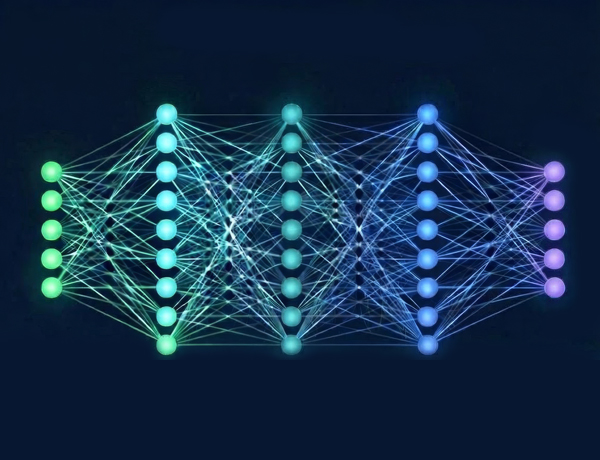
Learn Across Long Context
Quantum-inspired architectures are designed to capture long-range correlations in sequences where relevant information may be separated by thousands or millions of steps.
These methods run on GPUs today, creating a practical route to test quantum-derived approaches without waiting for fault-tolerant hardware.
Connect AI to Sensors
-
Prioritize patterns in RF and multi-sensor streams for faster awareness at the edge.
-
Detect spoofing and interference to support trusted positioning, navigation, and timing.
-
Use AI-driven simulation, sensor fusion, optimization, and integrity monitoring to improve quantum sensor performance.


Benefits
More Signal From Complex Data
Apply quantum insight to models, sensors, and scientific workflows on the computing infrastructure available today.
-
Longer Context
Model relationships across long sequences for foundation models, genomics, sensing, and other connected datasets.
-
Deployable Today
Run quantum-inspired machine learning architectures on GPUs without requiring access to a quantum computer.
-
Real-time Awareness
Reduce sensor data to mission-relevant information through low-latency preprocessing and context analysis.
-
Quantum-Ready Workflows
Translate application intent across languages and hardware with compilation, optimization, and execution tools.


Case Studies
AI and Quantum in the Field
Programs turning advanced methods into testable capabilities.
-
 Explore QuIRC
Case Study
QuIRC
Quantum-Inspired Rapid Context supports low-latency preprocessing for RF and multisensor streams, prioritizing mission-relevant signals at the edge.
-
 Explore IMPAQT
Case Study
DARPA IMPAQT
Infleqtion was selected for DARPA’s IMPAQT program to advance quantum algorithms for generative ML, with applications in genomics and more.
-
 Explore SAPIENT
Case Study
Secure AI for Position, Navigation, and Timing (PNT) - SAPIENT
Infleqtion won the Army’s xTechScalable AI competition with SAPIENT, using CML to process sensor data with small models at scale on NVIDIA Jetson.
Related Products
Model to Machine
Build on GPUs today and prepare for integrated quantum workflows.
-
 Explore CML
Contextual Machine Learning
Architectures that bring quantum-derived approaches to long-context machine learning on today's GPU infrastructure.
-
 Explore Superstaq
Superstaq Quantum Software
Hardware-aware compilation, optimization, execution, and resource tools for quantum application developers.
Frequently Asked Questions
Infleqtion develops algorithms inspired by quantum information and designs workflows that connect GPUs with quantum processors. Its CML architecture runs on GPUs today for long-context learning, while Superstaq and application tools support future QPU-enabled models. Infleqtion also uses machine learning to process quantum-sensor data and improve quantum-system operation.
CML targets the difficulty of learning useful relationships across long sequences and multiple data sources without excessive memory and compute. It is designed to preserve relevant history for tasks such as forecasting, signal interpretation, sensor fusion, and genomics. That can help smaller models make better use of context, especially in edge environments with limited resources.
Yes. CML has been implemented on commercial GPU platforms, including NVIDIA data-center and Jetson edge hardware. This allows organizations to test quantum-inspired architectures in current computing environments. A GPU implementation does not mean a workload has achieved quantum advantage; it provides near-term utility and a path toward future hybrid GPU-QPU execution.
Infleqtion is applying its AI and ML work to RF signal analysis, sensor fusion, resilient PNT, autonomous systems, energy forecasting, genomics, biomedical research, and scientific modeling. These applications share a need to find patterns across long or heterogeneous data streams. The company also develops AI-assisted tools for quantum error correction, calibration, and sensor performance.
The strongest candidates have long sequences, delayed relationships, multiple sensor or data types, and constraints on memory, latency, or edge compute. Evaluation should compare CML with strong conventional baselines using the organization’s own accuracy, runtime, memory, robustness, and deployment requirements. Infleqtion can help define a benchmark or prototype for a specific use case.
News & Insights
Latest Updates
Follow our progress from research to real-world deployment.
View All News
Put More Context Within Reach
Bring us the data problem your model misses.