

Quantum for Energy
Compute, sense, and optimize for a more resilient and resource-efficient energy system.
More Efficient Resource Management & Discovery
Energy systems are becoming more dynamic, distributed, and difficult to model. Infleqtion brings quantum computing, software, precision timing, and gravity sensing to problems that strain classical tools. Our teams are working with energy leaders on grid contingency analysis, supporting U.S. Department of Energy programs, and advancing quantum approaches for materials, infrastructure, and subsurface awareness. Infleqtion's neutral atom platform connects application development with complete systems, so organizations can begin defining useful workloads now while building toward larger logical qubit systems. The same platform also powers fieldable sensors for precise timing and gravity measurement.
Explore Your Use Case



Featured Video
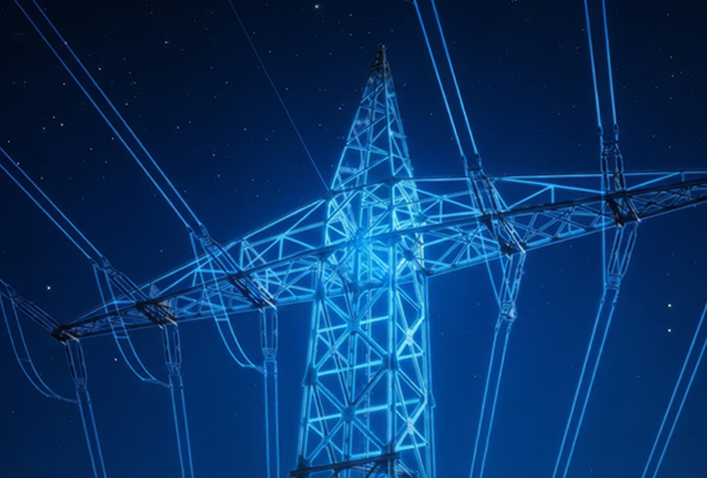
Watch: Infleqtion and Eaton on Grid Resilience
Eaton selected Infleqtion for a multiyear, multimillion-dollar program applying quantum computing to grid contingency analysis and resilience. Watch their Q2B25 Silicon Valley presentation.
August 28, 2026
- Customer-defined energy workload
- Hardware-software co-design approach

Tackle Unit Commitment
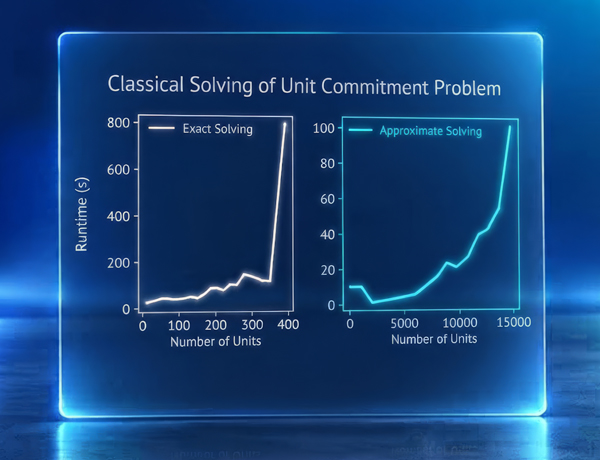
The Unit Commitment problem determines which power plants should run to meet demand at the lowest cost while respecting ramp times, fuel limits, emissions targets, and other operating constraints.
Large-grid models are computationally expensive and often require simplifying assumptions that can reduce efficiency and increase costs.
Optimize Changing Grids
-
Evaluate more possibilities in less time to pursue closer-to-optimal generation schedules.
-
Adapt rapidly as demand, renewable availability, operating constraints, and market conditions change.
-
Improve resource allocation to support lower operating costs, reduced emissions, and stronger reliability.

Use Cases
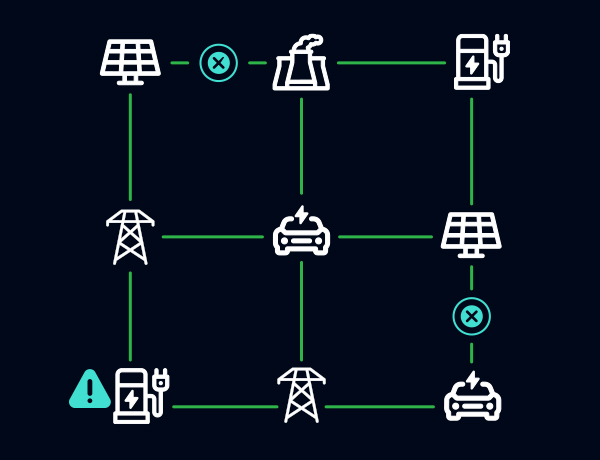
From Electrons to Infrastructure
Address energy challenges across use cases with one quantum platform.
-
Grid Resilience
Explore complex operating scenarios and contingency decisions with hybrid quantum-classical application workflows.
-
Resource Intelligence
Use gravity measurements to improve insight into subsurface structures, density changes, and mineral resources.
-
Minerals Discovery
Model strongly correlated systems relevant to batteries, superconductors, magnets, and catalytic processes.
-
Precise Synchronization
Maintain trusted timing across distributed energy infrastructure when external timing signals are disrupted.


Collaboration
Quantum Optimization for Energy
Partners advancing quantum methods for energy delivery.
- ENCODE connects quantum computing with dynamic resource availability and grid constraints.
- Partners are developing quantum approaches to Unit Commitment and energy delivery optimization.




The energy future will require new ways of thinking and innovation, including computational paradigms. Through this collaboration, we are exploring how quantum computing can accelerate the energy sector’s ability to solve complex grid challenges and drive innovation in energy resilience.”

Case Studies
Quantum-Enabled Energy in Practice
Customer and government programs connect workloads to systems.
-
 Read the Case Study
Use case
Eaton: Grid Resilience
A multiyear program applies Infleqtion quantum computing to grid contingency analysis and more resilient energy operations.
-
 Read the Case Study
Case Study
ARPA-E ENCODE
Infleqtion, EPRI, NREL, and Argonne are advancing quantum approaches to Unit Commitment and energy delivery optimization.
-
 Read the Case Study
Case Study
DOE Genesis Mission
Infleqtion was selected for three DOE Genesis Mission projects spanning quantum computing applications for energy and materials.
Related Products
Build Your Workflow with Quantum
Connect application development, optimized execution, and field sensing.
-
 Explore Computing
Quantum Computing
Neutral atom systems and hardware-aware software for energy optimization, simulation, and application development.
-
 Explore Inertial Sensing
Gravity Sensing
Cold atom instruments for precise gravity measurement across Earth, subsurface, and space applications.
-
 Explore Software
Quantum Software
Specialized algorithms and hardware-aware tools for energy optimization, grid analysis, and quantum application development.
Frequently Asked Questions
Quantum computing and quantum-inspired AI can address difficult optimization, forecasting, and simulation problems across power generation, transmission, storage, and markets. Quantum sensors can add precise information about gravity and the subsurface. Infleqtion is developing these capabilities to support grid reliability, resource planning, critical-mineral exploration, materials discovery, and complex energy-system decisions.
Infleqtion is working on unit commitment, grid contingency analysis, demand forecasting, grid observability, and related optimization problems. Its programs combine quantum algorithms, Superstaq, GPUs, and neutral atom quantum hardware with power-system expertise from industry and government partners. The aim is to evaluate more complex scenarios and improve decisions as grids add renewables and distributed resources.
Cold atom gravity sensors measure small variations in the gravitational field caused by differences in subsurface mass. Those measurements can help map geological structures and guide exploration for critical minerals, energy resources, groundwater, or underground voids. Gravity data does not identify a specific material on its own; it complements geological models, surveys, and other sensing methods.
CML is designed to learn from long sequences and multiple data streams, which can include historical demand, weather, renewable generation, equipment status, and market signals. That makes it relevant to load forecasting, anomaly detection, and other grid tasks where long-range patterns matter. Performance must be validated on the utility’s data, constraints, and operating environment.
Infleqtion has active energy research and application-development programs, including work associated with ARPA-E and grid-industry partners. These efforts demonstrate progress and help define useful workloads, but they should not be described as broad, production-scale quantum advantage across the energy sector. Near-term value can come from quantum-inspired methods, GPU acceleration, and quantum-readiness work while hardware advances.
News & Insights
Latest Updates
Follow our progress from research to real-world deployment.
View All News
Put Quantum to Work on Energy
Bring us your grid or energy materials challenge.