



• AI & ML
  • Energy
  • Materials Science
  • Quantum Computing
  • Software

Quantum Computing Targets Grid and Materials

Context

Energy challenges span grid operations and the materials that carry power. Classical methods can struggle with large optimization and simulation problems in both areas.

Overview

ARPA-E selected Infleqtion for a $6.2 million grid optimization program and $3.9 million project focused on superconductivity and new energy materials.

ARPA-E Quantum Energy Programs

Key Problem

Grid operators need better optimization as demand rises, while materials researchers need new ways to understand superconductivity and identify conductors with zero losses.

  • $6.2M

    ENCODE grid optimization award

  • $3.9M

    QC3 materials funding

  • 1,600

    Physical-qubit array demonstrated

  • 12

    Logical qubits with error detection

Two Energy Programs

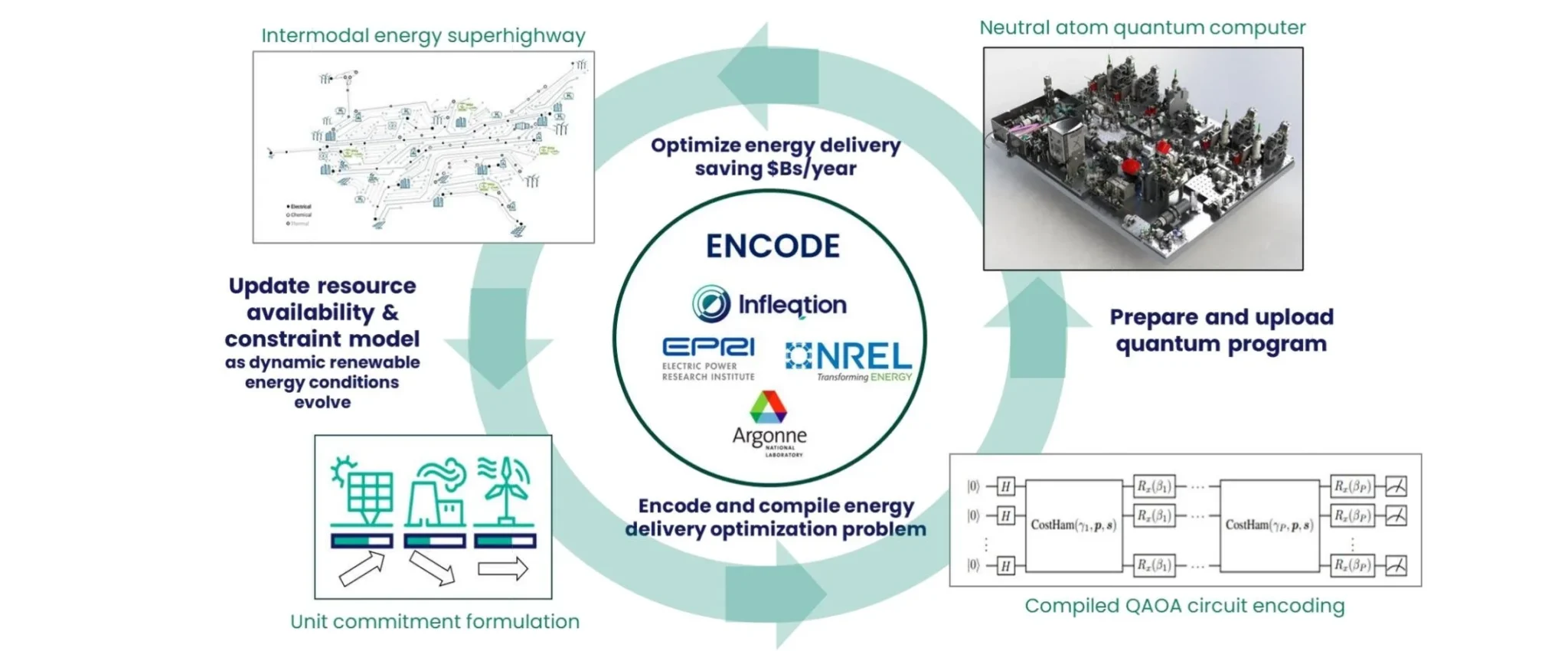
ENCODE applies quantum-enhanced methods to grid optimization. The QC3 project uses a neutral-atom quantum computer and a new algorithm to study superconductivity.

A Full-Stack Approach

  • ENCODE - Grid scheduling and optimization.

  • QC3 - Superconductors and energy materials.

  • Hardware - Neutral-atom quantum computing.

  • Software - Quantum algorithms and Superstaq.

Key Results and Findings

Infleqtion executed the $6.2 million ENCODE contract and began development with energy-sector collaborators. ARPA-E also selected the company for $3.9 million in QC3 funding for chemistry and materials research.

Implications

ENCODE aims to improve the accuracy or speed of grid optimization. The QC3 project aims to improve understanding of superconductivity and discover previously unknown superconducting materials.


Put Quantum to Work

Talk with our team about the quantum systems and software that fit your mission, infrastructure, or research priorities.

Talk to an Expert