

• Life Sciences
  • Software

Quantum Workflow Advances Oncology Research

Context

Biomarker discovery requires analysis of high-dimensional, multimodal cancer data. Traditional tools can miss subtle, higher-order interactions across DNA, RNA, and images.

Overview

Infleqtion’s team advanced to Phase 3 of Wellcome Leap’s Q4Bio Challenge to test a hybrid quantum-classical biomarker workflow on real oncology data and quantum processors.

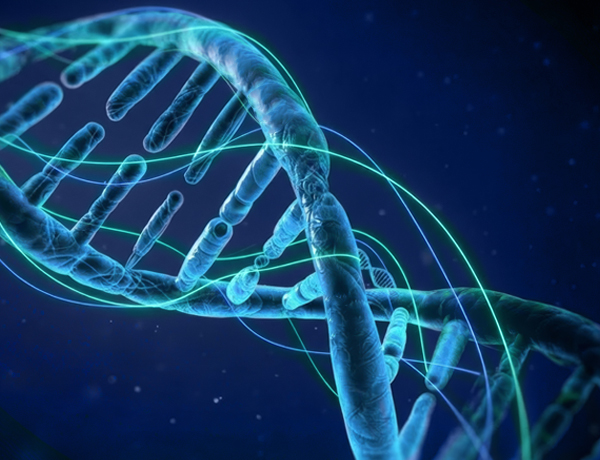
DNA strand is illuminated in light and wrapped in laser light.

Key Problem

Researchers need compact, clinically useful feature sets that can support precision oncology decisions while remaining practical on current and near-term quantum hardware.

  • Phase 3

    Final-stage demonstrations

  • $2M

    Phase III contract

  • 12

    Logical-qubit application

  • >50x

    GPU simulation speedups observed

An End-to-End Workflow

The approach organizes DNA, RNA, and pathology image features, then applies higher-order optimization designed to capture interactions missed by traditional methods.

GPU and QPU Roles

  • Training - GPU-accelerated model optimization.

  • Validation - NVIDIA CUDA-Q simulation before hardware runs.

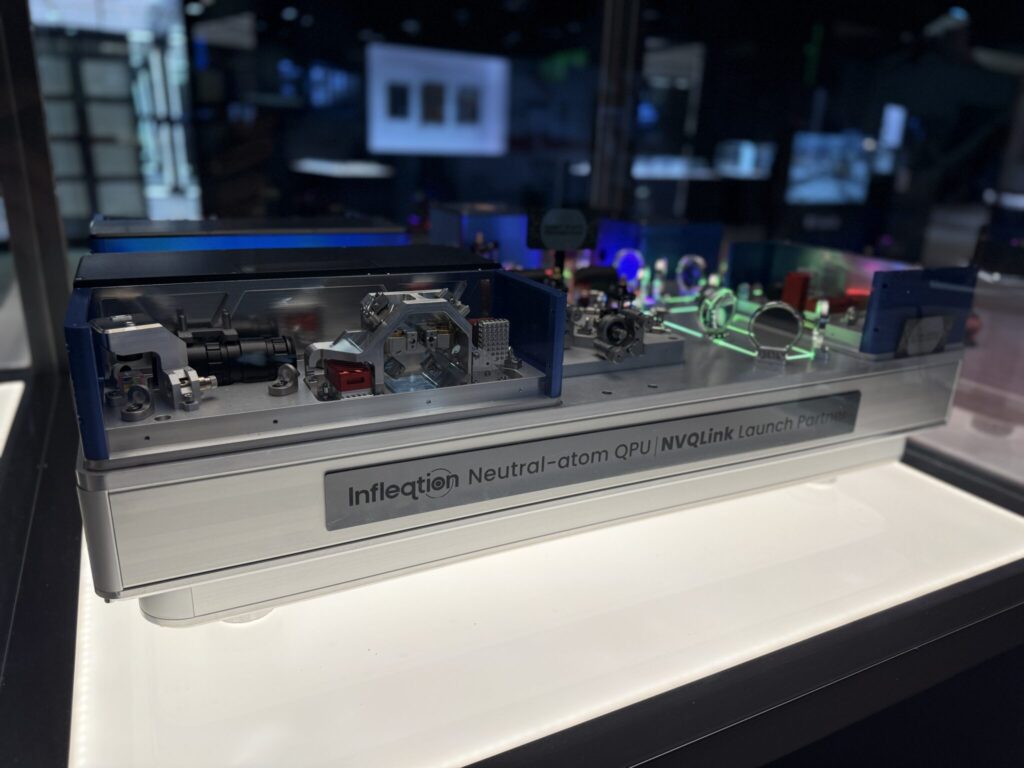
  • Execution - Sqale logical-qubit experiments.

  • Feedback - NVQLink supports future real-time loops.

Key Results and Findings

Phases 1 and 2 produced a hybrid workflow and the Hyper-RQAOA routine. Phase 3 moves from controlled simulation to experiments on real quantum processors using a curated head-and-neck cancer cohort.

Implications

The goal is to determine whether quantum-in-the-loop analysis can reveal small biomarker sets that help forecast treatment response. The program tests that question on current devices rather than presenting it as an achieved clinical result.


Put Quantum to Work

Talk with our team about the quantum systems and software that fit your mission, infrastructure, or research priorities.

Talk to an Expert