

Quantum Beyond Earth
Field-tested quantum systems for discovery, autonomy, and intelligence in space.
The Quantum Space Frontier
Space missions ask more of every instrument: greater precision, less dependence on Earth, and reliable operation in unforgiving environments. Infleqtion develops neutral atom systems that bring quantum sensing and control out of the laboratory and into orbit. Our technology has operated on the International Space Station since 2018, supporting cold atom research in microgravity. Today, Infleqtion and NASA's Jet Propulsion Laboratory are advancing the Quantum Gravity Gradiometer Pathfinder, a mission designed to demonstrate the first quantum gravity sensor in space. Across timing, gravity, inertial sensing, and quantum cores, we are building the tools for a more autonomous and observable frontier.
Plan a Mission




Featured Video
Neutral Atom Technology Operating in Space
Infleqtion technology has supported NASA's Cold Atom Lab on the International Space Station since 2018. The facility received an upgrade delivered in May 2026.
- Cold atom research in microgravity
- System upgrade delivered to the ISS in 2026

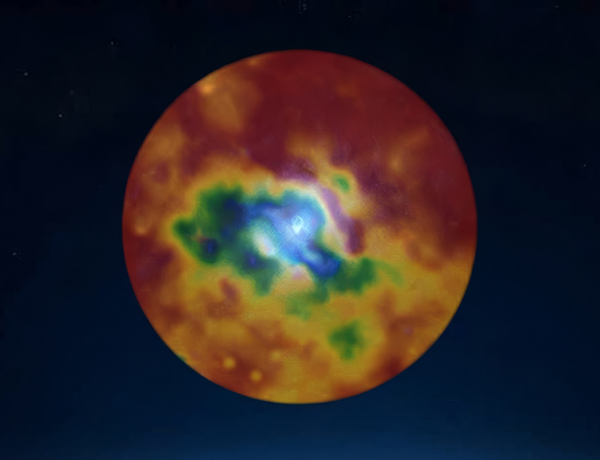
Map What Cannot Be Seen
Quantum gravity sensing can reveal subtle changes in mass distribution, creating new ways to study Earth systems and characterize resources from orbit.
The NASA QGG Pathfinder is in development as a mission to demonstrate the first quantum gravity sensor in space.
Navigate With Autonomy
-
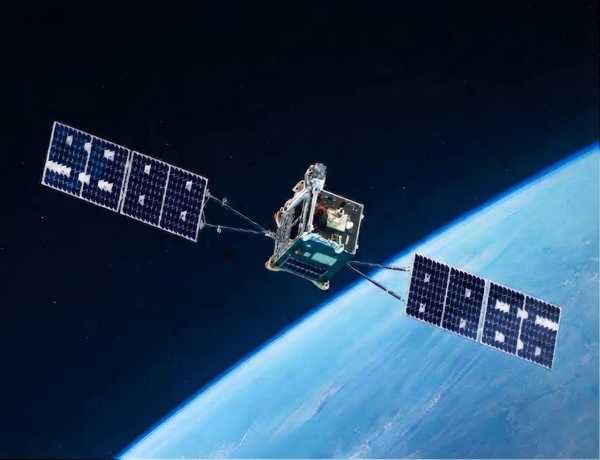
Optical atomic clocks provide precise local timing and holdover when continuous ground or GNSS support is unavailable.
-
Cold atom inertial sensing offers a path to lower-drift navigation for spacecraft and exploration platforms.
-
Compact quantum cores give mission designers a modular route to cold atom capabilities.

Applications
More Intelligence from Every Mission
Neutral atom systems extend precision sensing from the lab to orbit and other demanding environments.
-
Microgravity Science
Control ultracold atoms in orbit to investigate quantum phenomena that are difficult to observe on Earth.
-
Earth Intelligence
Measure gravity with quantum sensors to improve insight into mass change, geology, and subsurface structure.
-
Resilient Timing
Keep instruments, payloads, and communications synchronized with a precise local optical frequency reference.
-
Autonomous Navigation
Combine quantum timing and inertial sensing to reduce reliance on external navigation signals and ground contact.


Collaboration
America's Quantum Space Initiative
Accelerating quantum-enabled space infrastructure.
- Collaboration across industry, government, academia, and the space ecosystem moves quantum technology from lab to orbit.
- Sensing, timing, communications, navigation, and computing for commercial, civil, and national security missions.






The opportunity ahead is bigger than any one company, institution, or discipline. By bringing together innovators from across the ecosystem, we can help unlock the next frontier at the intersection of quantum and space.”

Related Products
Mission-Engineered Solutions
Explore quantum sensing solutions built for space missions.
-
 Explore Inertial Sensing
Inertial Sensing
Cold atom inertial sensing for lower-drift navigation when Earth-based signals are delayed, intermittent, or unavailable.
-
 Explore Tiqker
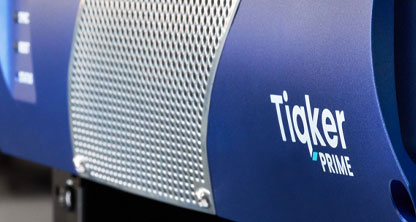
Tiqker Optical Atomic Clock
A portable optical atomic frequency reference for precise timing, synchronization, communications, and ground infrastructure.
Frequently Asked Questions
Infleqtion develops cold atom systems, quantum sensors, precision clocks, software, and enabling components for space science and infrastructure. Its technology supports research aboard the International Space Station and development of a NASA quantum gravity pathfinder. Longer-term applications include Earth observation, resilient navigation and timing, satellite synchronization, planetary science, quantum networking, and autonomous space systems.
Infleqtion designed, developed, and tested the Physics Package Assembly for NASA Jet Propulsion Laboratory’s Cold Atom Lab aboard the International Space Station. The system creates and controls ultracold atoms and Bose-Einstein condensates in microgravity. That work established engineering experience for operating cold atom technology in orbit and supports the development of future space-based quantum instruments.
The NASA JPL-led Quantum Gravity Gradiometer Pathfinder is intended to test quantum gravity sensing from space. Infleqtion is responsible for the atomic physics package, including the sensor head, lasers, electronics, vacuum, and controls that create and measure ultracold atoms. The program is advancing through hardware development and microgravity testing toward a future flight mission.
Microgravity allows cold atoms to remain in free fall for longer periods, which can increase the time available for an atom-interferometry measurement and potentially improve sensitivity. A space platform also provides repeated access to large regions of Earth or other planetary bodies. Real performance still depends on instrument design, environmental control, calibration, mission orbit, and data processing.
High-stability atomic clocks can improve on-board timing, navigation, communications, geolocation, and synchronization across satellites and ground infrastructure, particularly when GPS-derived time is unavailable or insufficient. Tiqker Prime is the current rack-mounted terrestrial product, while space-qualified and smaller Tiqker variants are future systems under development. Mission use requires space qualification and system-level integration.
News & Insights
Latest Updates
Follow our progress from research to real-world deployment.
View All News
Take Quantum to the Next Frontier
Design your next space mission with Infleqtion.