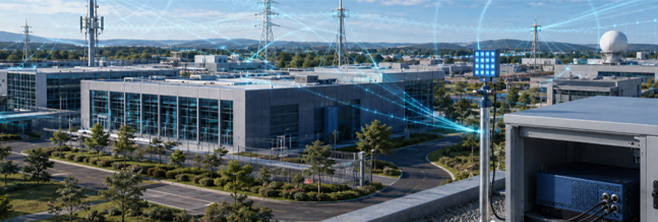
Prototype
- Air, road, and maritime trials
- BEC operation in flight
- Continuous-beam inertial sensing
- 100+ Hz demonstrated bandwidth
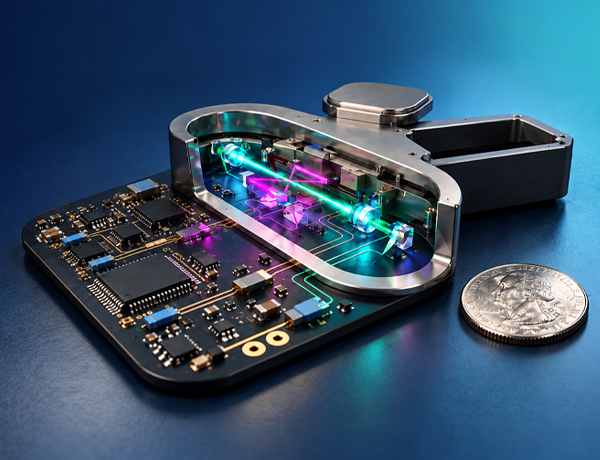
Cold atom interferometers reference identical, unchanging atoms, reducing the bias drift that compounds in conventional inertial sensors over long missions.
Infleqtion's continuous-beam architecture has demonstrated more than 100 Hz bandwidth with no measurement dead time.
Acceleration and rotation for independent navigation.
Gravity and gravity gradients for mapping and exploration.
Absolute atomic references reduce recalibration needs.
Continuous output supports dynamic applications.
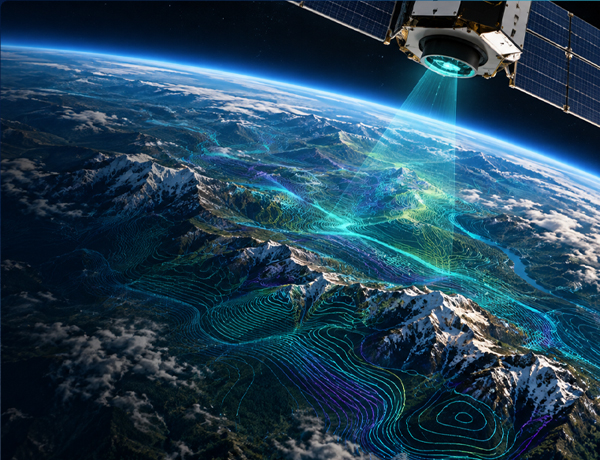
Roadmap Highlights
Infleqtion is advancing from field-tested sensors toward integrated navigation and mapping systems. Future capabilities are targets and subject to change.
Get a DemoCAPABILITIES
Quantum stability and bandwidth beyond the lab.
Continuous-beam sensing provides high-rate output without gaps between measurements.
Hybrid quantum-classical sensing tracks rapid platform motion while preserving long-term stability.
Atomic properties support stable measurements and reduce repeated calibration requirements.
Measure acceleration, rotation, gravity, and gravity gradients from a shared technology base.
Field Progress
Demonstrations across air, road, sea, and space programs.


Applications
Navigate, map, and monitor without vulnerable external signals.
Provide stable inertial measurements for ships, aircraft, autonomous platforms, and GPS-denied operations.
Map gravity from orbit, support planetary exploration, and enable precise aerospace measurements.
Detect gravity anomalies for subsurface mapping, infrastructure monitoring, mining, and resource exploration.
More Solutions
Combine independent inertial measurements with a stable local clock.
Quantum inertial sensing uses atoms as stable test masses to measure acceleration, rotation, or gravity. In an atom interferometer, laser pulses split and recombine atomic matter waves, and their interference pattern reveals the motion or gravitational field experienced by the atoms. Because atoms of the same isotope are identical, they provide an absolute reference with very low long-term drift.
A quantum inertial sensor can measure a platform’s motion without relying on an external satellite signal. Those measurements can correct the accumulating bias and drift of conventional inertial sensors, extending accurate navigation when GPS or GNSS is unavailable, jammed, or spoofed. Infleqtion is developing high-bandwidth cold atom sensors for integration with classical navigation systems in dynamic environments.
Both use atom interferometry, but they answer different questions. Inertial navigation measures acceleration and rotation to estimate how a platform is moving, while gravimetry or gravity gradiometry measures gravitational acceleration or differences in gravity across space. Gravity measurements can reveal changes in subsurface or planetary mass, while inertial measurements support positioning and navigation.
Potential applications include navigation for ships, submarines, aircraft, spacecraft, autonomous vehicles, and other platforms operating without reliable GPS. Gravity-sensing applications include Earth observation, planetary science, underground-resource assessment, infrastructure monitoring, and geophysical mapping. The sensor design and performance requirements differ by mission.
Infleqtion has demonstrated cold atom inertial technology in laboratory, road, maritime, and flight-related programs and is advancing systems with partners including NASA and the UK Royal Navy. Productization, miniaturization, multi-axis capability, and integration into operational navigation units remain active development areas. Organizations should contact Infleqtion to discuss trials, partnerships, and program-specific availability.
Request a demonstration and discuss your mission needs.