Efficient Encoding
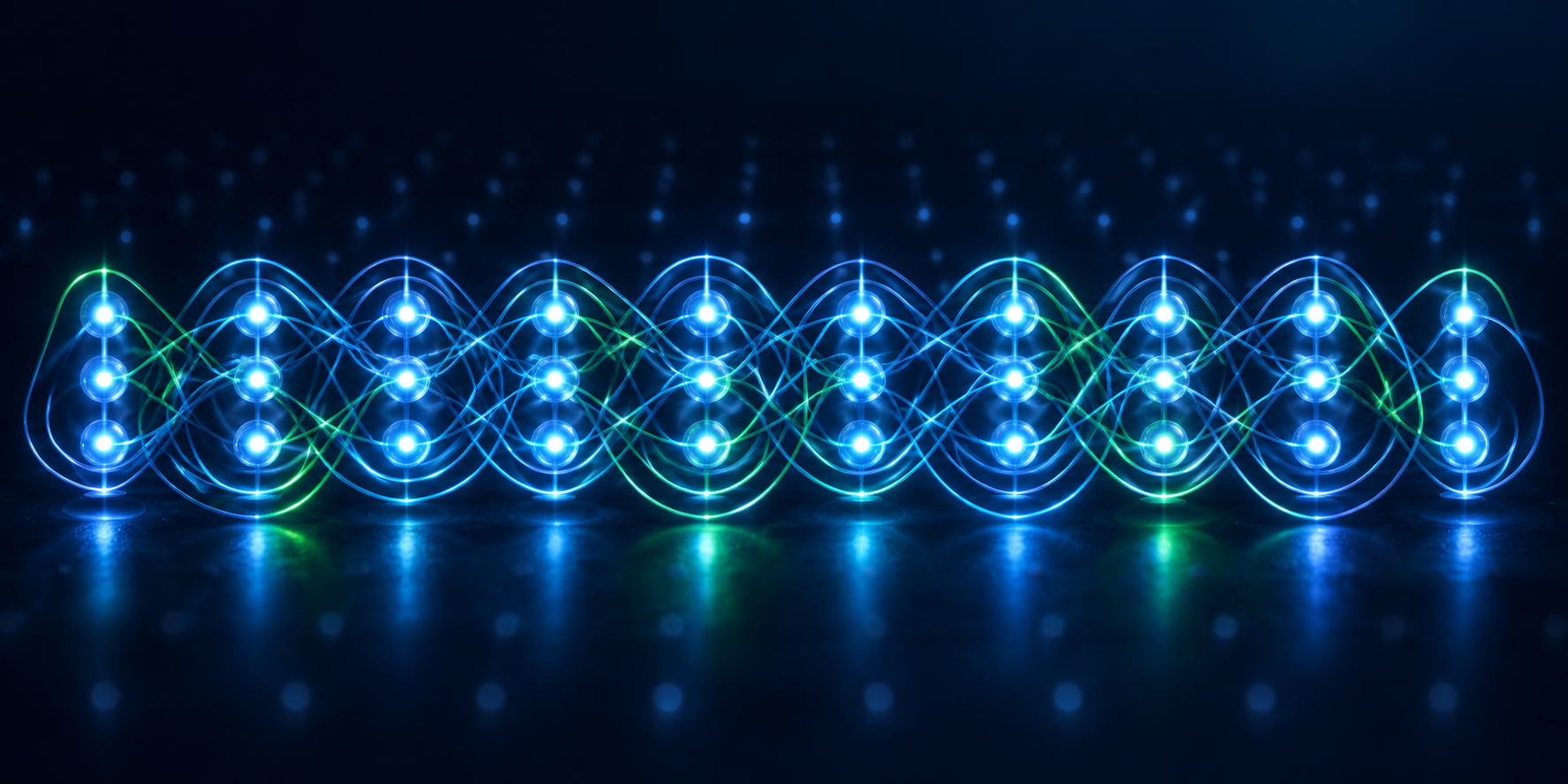
Ten blocks of eight atoms encoded three logical qubits per block, producing 30 logical qubits from 80 physical qubits
2026
A measured path from error detection to utility-scale quantum computing.
Infleqtion demonstrated 30 entangled logical qubits in a single computation on Sqale, using 80 physical qubits and approximately 1,000 physical operations. The achievement delivers the 2026 logical qubit milestone and advances the roadmap toward targets of 100 logical qubits in 2028 and 1,000 in 2030.
Logical Qubits
Physical qubits are vulnerable to noise and loss. Logical qubits encode information across multiple physical qubits so defined errors can be detected or corrected. The goal is longer, more reliable computation, not a larger qubit count for its own sake.




Our Process
Our applications team maps real-world objectives to hardware-aware quantum solutions and timelines.
Identify the business or mission objective, success metrics, and constraints that matter.
Map the challenge to quantum, classical, or hybrid methods and estimate required resources.
Develop and test workflows using realistic simulation, benchmarks, and available hardware.
Refine compilation and execution as hardware capability and application needs advance.
Related Products
Hardware and software unite individual qubit-addressing capabilities with dynamically reconfigurable atom arrays.

Our neutral atom, fault-tolerant quantum computer delivers scalability, speed, and fidelity to unlock the classically impossible.
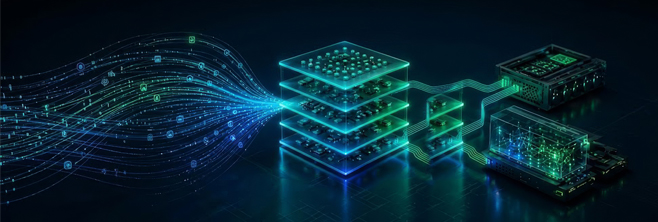
Use Superstaq and Infleqtion's application software to compile, optimize, and run demanding workloads across quantum and classical systems.
Infleqtion’s roadmap charts Sqale’s progress toward larger, more reliable logical quantum computation. Infleqtion demonstrated two logical qubits in 2024, 12 in 2025, and 30 entangled logical qubits in 2026. The next roadmap targets are 100 logical qubits in 2028 and 1,000 in 2030.
As of September 2026, Infleqtion has demonstrated 30 entangled logical qubits in a single computation on its Sqale neutral atom quantum computer. The experiment used 80 physical qubits and approximately 1,000 physical quantum operations, or about 1 KiloQuOp.
Yes. Infleqtion achieved its 2026 roadmap milestone by demonstrating 30 logical qubits on Sqale. The experiment connected all 30 logical qubits in one entangled computation. Infleqtion is now working toward its next roadmap target of 100 logical qubits in 2028.
The result shows more than the ability to prepare 30 logical qubits. Infleqtion entangled all 30 in one coherent circuit and produced an experimental hit rate approximately 1,000 times the uniform-random baseline. This tests whether the logical qubits can work together in a computation, an essential step toward larger and more useful quantum programs.
With its 2026 roadmap achievement, Infleqtion is the first neutral atom quantum computing company to reach 30 logical qubits on a commercial system.
A physical qubit directly stores quantum information but is vulnerable to noise, loss, and operational errors. A logical qubit encodes information across multiple physical qubits so defined errors can be detected or corrected. Infleqtion’s 2026 experiment encoded 30 logical qubits across 80 physical qubits, using groups of eight atoms to encode three logical qubits.
Sqale has demonstrated important building blocks for fault-tolerant quantum computing, and Infleqtion is still working toward a utility-scale fault-tolerant system. The 2026 experiment operated with error detection and software-based loss correction. Infleqtion’s roadmap targets larger logical qubit systems and stronger error suppression as the platform advances.
Sqale combines individual qubit addressing with dynamically reconfigurable atom arrays. Individual addressing enables selected atoms to be entangled in place, while atom movement provides all-to-all connectivity when needed. This combination is designed to reduce unnecessary motion, accumulated error, atom loss, and runtime delays while supporting complex logical circuits.
Bring us a challenge worth solving.